CLUB HISTORY

MARQUETTE, MICHIGAN · ESTABLISHED 1926

One Hundred Years of Golf, Friendship and Community

The Marquette Golf Club Centennial Timeline follows the people, decisions and defining moments that carried the Club from the effort to bring golf back to Marquette in 1919 to its centennial era in 2026.

Explore fifty-two milestones across three eras: the Club's founding and survival, its expansion and modernization, and the reinvention that introduced Marquette Golf Club to a national audience.

CENTENNIAL TIMELINE

1919—2026

Move Through a Century

Scroll one continuous chronicle from the first milestone to the centennial.

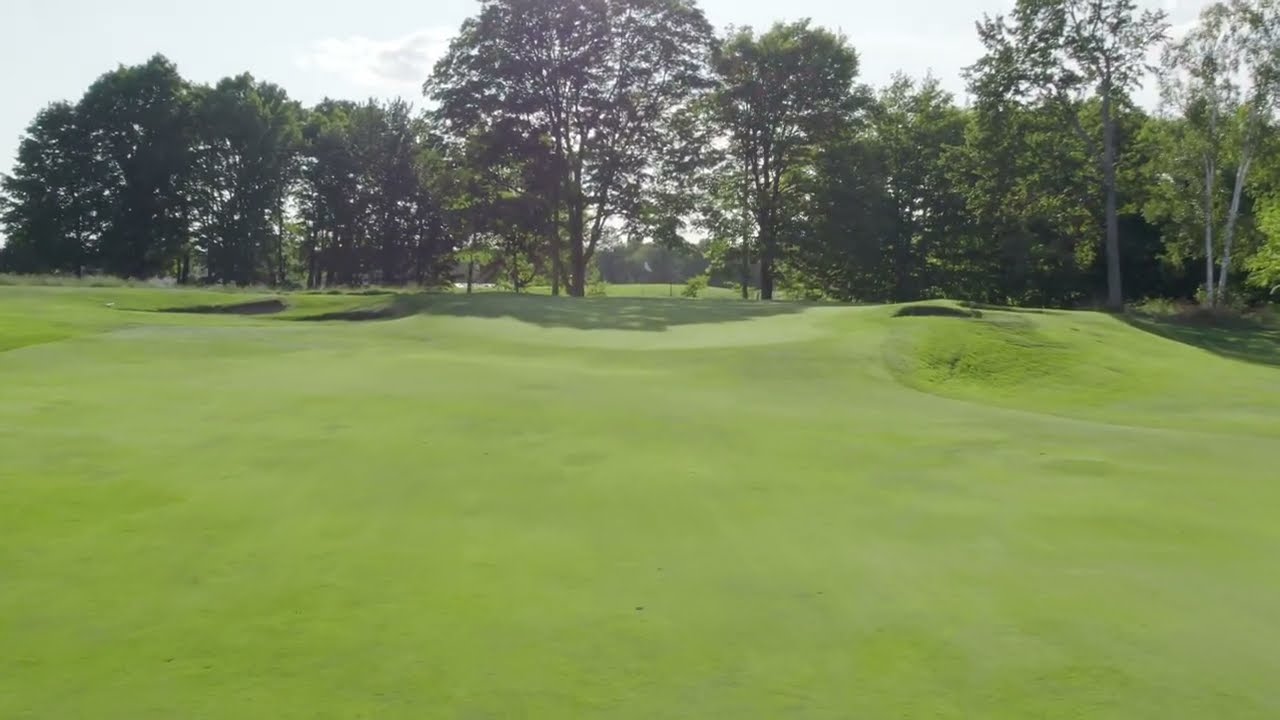
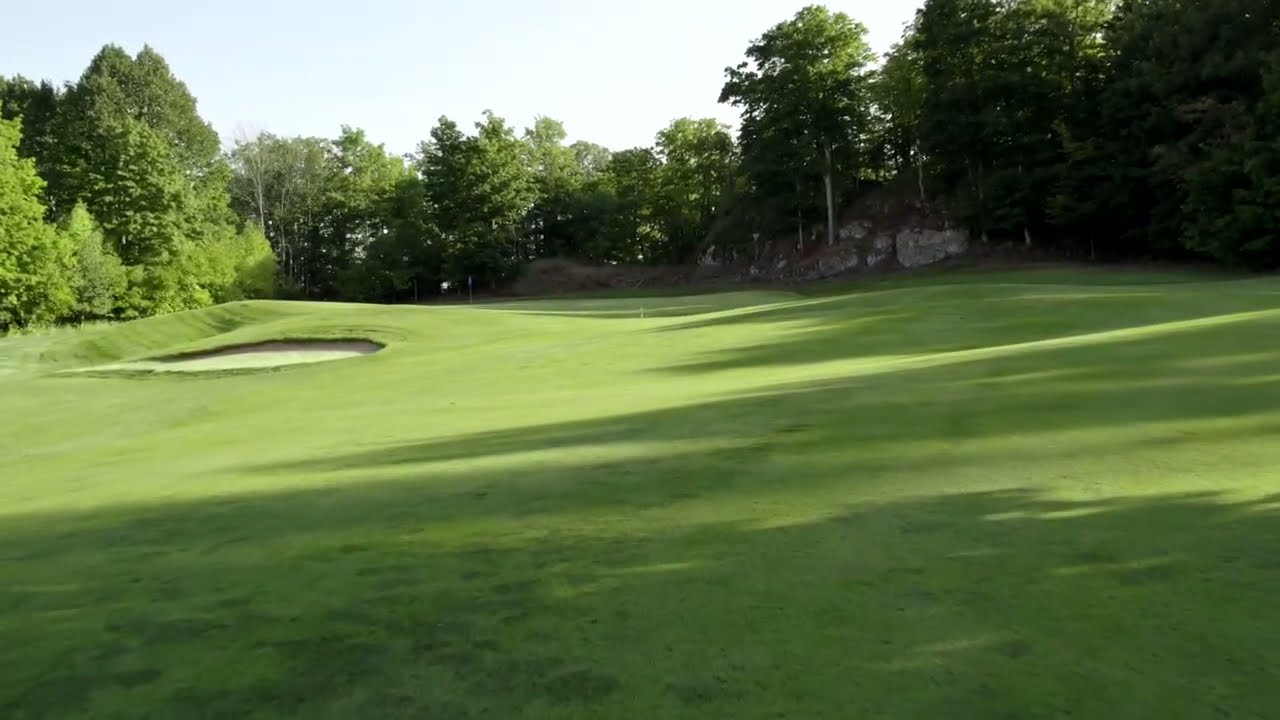
A Langford and Moreau hole on the Heritage Course
Centennial eraFounding, Survival & Early Growth1919–1949
Heritage Course · Original Langford & Moreau Loop

Milestone 1 of 52 · Founding, Survival & Early Growth

The Return of Golf

Following the decline of the Town & Country Sports Club, Marquette found itself without a golf course. Former members, led by J.C. Gannon and other local leaders, began meeting to discuss bringing the game back to the community. Several potential locations were evaluated, including property near the Club's present-day home. What began as conversation would eventually become one of the most significant community projects in Marquette's history.
Milestone 2 of 52 · Founding, Survival & Early Growth

The Search for a Home Begins

By 1922, the vision of restoring golf to Marquette had moved beyond conversation and into action. Under the leadership of E.A. MacDonald and Tom Redmond, the exploratory group began corresponding with respected golf course architects William Langford and Theodore Moreau. Their November site visit evaluated several possible locations, including the County Poor Farm (today's Shiras Hills), the Emblagaard Dairy property, and the Clark site. The visit confirmed that finding suitable land would prove far more challenging than anyone anticipated.

Milestone 3 of 52 · Founding, Survival & Early Growth

The Land Question

As momentum grew, so did the complexity of the project. Multiple architects, engineers, and consultants were engaged to evaluate potential sites, soils, and development opportunities. Negotiations advanced, stalled, and resumed as Club leaders worked through questions of location, cost, accessibility, and long-term viability. What once seemed a straightforward undertaking had become a defining challenge.

Milestone 4 of 52 · Founding, Survival & Early Growth

The Course of the Northwest

At a pivotal meeting held at the home of George Shiras, local leaders discussed land acquisition, architects, finance, and agronomic considerations while organizing what was then known simply as "The Club." During this period, Tom Redmond articulated an ambitious vision that would echo through the decades: "We want the Course of the Northwest—not a course." The statement captured the founders' determination to build something exceptional rather than merely adequate.

Milestone 5 of 52 · Founding, Survival & Early Growth

A Vision of Excellence

Correspondence exchanged with Langford and Moreau reveals the founders' growing confidence and ambition. In one letter, Club representatives wrote, "What we want to do is raise enough money to build one of the best courses in the United States." The statement reflected a remarkable aspiration for a community still working to secure land, funding, and organizational structure.

Milestone 6 of 52 · Founding, Survival & Early Growth

A Community Cause

As efforts to secure the Clark property intensified, Club leaders appealed directly to landowners and community stakeholders. Writing on behalf of the project, one representative observed, "There is no finer service which we can perform for this community than join in establishing a golf course here." The sentiment reflected the belief that the course would become a lasting civic asset for generations to come.

Milestone 7 of 52 · Founding, Survival & Early Growth

The Club Is Established

On November 8, 1926, local citizens gathered at Peter White Library to formally organize the Marquette Golf & Country Club. The founders personally pledged financial support through the purchase of stock, capitalizing the organization at $50,000 through 332 shares. Years of planning, correspondence, and negotiation had finally produced a permanent organization capable of turning vision into reality.

Milestone 8 of 52 · Founding, Survival & Early Growth

Langford & Moreau Selected

After years of searching for land, raising funds, and overcoming setbacks, Marquette Golf & Country Club formally commissioned renowned Golden Age architects William Langford and Theodore Moreau to design and construct its golf course. While financial realities limited initial construction to nine holes, the founders never abandoned their goal of creating a premier eighteen-hole facility for the community.

Milestone 9 of 52 · Founding, Survival & Early Growth

Golf Returns to Marquette

The founders' vision became reality when the new course opened for play under Club President Ralph R. Eldredge. Flags were raised, holes were cut, and members gathered to experience golf in Marquette once again. Club Professional Percy Cook helped inaugurate the new era, bringing to life the dream first discussed nearly a decade earlier.

Milestone 10 of 52 · Founding, Survival & Early Growth

Building a Club Community

As the young Club matured, opportunities expanded for all members. In 1930, Mrs. Begole and Mrs. Peters were appointed to help organize programming and activities for women members. Their efforts reflected the Club's growing emphasis on both golf and social engagement.

Milestone 11 of 52 · Founding, Survival & Early Growth

Hidden in Plain Sight

The original Langford & Moreau routing design appeared within a Club prospectus and entered the historical record. Over time, however, its significance faded from institutional memory. The routing would remain effectively hidden in plain sight until its rediscovery in 2011, providing a remarkable connection to the founders' original vision for the course.

Milestone 12 of 52 · Founding, Survival & Early Growth

Surviving the Depression

With R.T. Peters serving as Club president, members at the 1933 annual meeting took "cognizance . . . of the nationally changed economic conditions prevailing at this time." They recognized that reducing annual dues was necessary to help members maintain their affiliation with the Club. The proposal, known simply as "The Plan," was expected to reduce dues income by approximately 30 percent. Members nevertheless approved it, understanding that its success depended on prompt payment and a shared commitment to the Club's survival.

Milestone 13 of 52 · Founding, Survival & Early Growth

The End of Prohibition

Months before the repeal of Prohibition, members approved a motion granting Percy Cook "the privilege of stocking and selling beer at the pro shop." More than a social change, the decision was one of several practical measures adopted to strengthen the Club's financial position and help ensure its survival during the difficult economic conditions of the era.

Milestone 14 of 52 · Founding, Survival & Early Growth

Weathering Difficult Times

Declining membership and continued financial pressure challenged the Club throughout the decade. With Dr. D.P. Hornbogen serving as president, Club leaders appealed to the City of Marquette and local organizations for financial assistance. Keeping the Club operating required persistence, cooperation, and the continued support of the community.

Milestone 15 of 52 · Founding, Survival & Early Growth

The Shiras Initiative

A proposal involving the Shiras Institute called for a $400 contribution, supported by an additional $600 in matching subscriptions. In exchange, the Club would provide broader public access to the course, strengthening its financial position and its connection to the community. In a decade defined by hardship, keeping the Club open remained an achievement in its own right.

Milestone 16 of 52 · Founding, Survival & Early Growth

Wartime Challenges

World War II reshaped every aspect of Club operations. Membership and participation declined, revenues fell, and resource constraints forced changes in maintenance practices that would influence the course for decades. Under President Robert F. Berry, the Board agreed to offer members of the United States armed forces access to Club facilities without charge, subject to its discretion. Club Professional Pat Gustafson helped steward the Club through these unprecedented circumstances.

Milestone 17 of 52 · Founding, Survival & Early Growth

Leadership in Difficult Times

During C.T. DeHaas's presidency, an attempted appointment of Frank Lynn ended almost immediately amid internal disagreement. Russ Leonard later succeeded him and is counted as the third professional in the Club's seven-person lineage. Golfdom publicly identified Leonard as Marquette's new professional in June 1945.

Milestone 18 of 52 · Founding, Survival & Early Growth

A New Clubhouse

As the war years drew to a close, the Club invested in its future by replacing the original clubhouse with a new facility. Completed during Harry Batchelder's presidency, the project marked an important step in the Club's postwar renewal and created a new center of Club life for generations of members.

Milestone 19 of 52 · Founding, Survival & Early Growth

Modernizing the Club

Under Club President R.H. Bordeau, leaders undertook a comprehensive review of the Club's bylaws. Drawing on model documents prepared by the American Golf Foundation, members adopted a revised framework that "vacated, abrogated, and repealed" the original Constitution and Bylaws adopted in 1928. The new framework reflected the Club's continued maturation and helped guide it into the postwar era.

Milestone 20 of 52 · Founding, Survival & Early Growth

Planning for Expansion

Led by President B.T. Micklow, the Club commissioned a committee to sell stock to finance an expanded clubhouse and the construction of an additional nine holes. The effort raised $10,102 in capital, moving the Club closer to fulfilling its founders' original vision. The Club also hired Harry Flora as its fourth golf professional.

Milestone 21 of 52 · Founding, Survival & Early Growth

Regional Recognition

The Mining Journal reported that finishing touches were being placed on the newly expanded clubhouse, which local observers described as "among the finest in northern Michigan." With more than $105,000 invested in the project and the golf course earning widespread praise, the Club entered a new era. Dances, square dances, dinners, parties, and other gatherings filled the social calendar, bringing members together beyond the fairways. Two decades after its founding, Marquette Golf & Country Club had firmly established itself as one of the Upper Peninsula's premier golf clubs.

A Langford and Moreau hole on the Heritage Course
Centennial eraExpansion, Improvement & Modernization1950–1999
Heritage Course · Original Langford & Moreau Loop

Milestone 22 of 52 · Expansion, Improvement & Modernization

A Growing Club Community

As membership grew, the Club's social traditions expanded alongside the game. At the annual meeting, Club President Lee McGinley introduced Mrs. George Keskey, chair of the Ladies Organization. Keskey outlined an ambitious program for the coming year and reported a treasury balance of $1,129. The organization continued to play an increasingly important role in Club life.

Milestone 23 of 52 · Expansion, Improvement & Modernization

Revisiting the Founders' Vision

More than a generation after the original course opened, the Club—led by President C.J. St. Germain—revisited William Langford and Theodore Moreau's original eighteen-hole routing. Club leaders corresponded with Langford, who was nearing retirement and heavily committed to other projects; his longtime partner, Moreau, had died in 1942. Although expansion did not proceed immediately, the original routing returned to the Club's long-range plans.

Milestone 24 of 52 · Expansion, Improvement & Modernization

Planning the Second Nine

Under President Leo O. Beldo, the Club appointed a study committee to investigate construction of a second nine. Chaired by Homer Hilton, with William Connors as co-chair, the committee recommended moving forward. The Club then engaged golf course architect David Gill, who had built a Midwestern reputation for completing unfinished Langford and Moreau projects.

Milestone 25 of 52 · Expansion, Improvement & Modernization

Harry Cebalo Arrives

During H.J. Elliott's presidency, the Club hired Harry Cebalo as its fifth golf professional.

Milestone 26 of 52 · Expansion, Improvement & Modernization

Fire Strikes the Golf Shop

A lightning strike destroyed the golf shop and its contents in late August. Harry Cebalo quickly relocated golf operations to the clubhouse basement, where members and staff conducted business for more than a decade as plans for a permanent replacement evolved.

Milestone 27 of 52 · Expansion, Improvement & Modernization

The Founders' Dream Realized

More than forty years after William Langford and Theodore Moreau were commissioned, the Club completed its long-awaited eighteen-hole course with a David Gill–designed second nine. Centennial records place the opening ceremony on July 15, 1968; the Club's current course overview dates the addition to 1969. Club Professional Harry Cebalo recognized Superintendent Jack Miller's construction work, and charter members Ralph Kendricks, Norman Dobson, Dr. Dan Hornbogen, and C.T. DeHaas were honored as the first foursome to play the completed layout.

Milestone 28 of 52 · Expansion, Improvement & Modernization

Preparing for the Future

At the annual meeting, members considered an ambitious renovation and expansion of the clubhouse and golf shop. Plans called for larger dining and bar areas and more functional facilities. Under Club President Ken F. Hruska, the Board hoped to complete the improvements without a substantial increase in annual dues, balancing continued investment with responsible financial management.

Milestone 29 of 52 · Expansion, Improvement & Modernization

Investing in Youth Golf

Club Professional Harry Cebalo conducted the Club's inaugural youth golf school, introducing a new generation to the game. That year also brought expanded opportunities for women golfers as longstanding weekend playing restrictions were eased. Together, the changes marked an important step toward broader participation throughout the Club.

Milestone 30 of 52 · Expansion, Improvement & Modernization

A Golf Shop with a View

Designed by architect Howard McKie, a new freestanding golf shop opened alongside the renovated clubhouse. After more than a decade in the basement, Club Professional Harry Cebalo requested front windows so he could "see everything"—a sharp contrast with the temporary shop, where he could "see nothing." The death of the project's plumbing contractor delayed construction, but both projects were ultimately completed.

Milestone 31 of 52 · Expansion, Improvement & Modernization

Meeting New Challenges

With operating costs rising and infrastructure needs growing, Club leaders approved a dues increase. President Hartley Larson summarized the challenge: "We cannot continue to pay last year's bills with next year's dues." The Board also continued planning for a more reliable water supply, controlled expenses, stronger finances, and expanded youth golf.

Milestone 32 of 52 · Expansion, Improvement & Modernization

The Motorized Era

The Club constructed a new golf car storage facility capable of housing fifty vehicles. Members could now own personal motorized golf cars and lease storage space on-site, marking another step in the Club's continuing modernization.

Milestone 33 of 52 · Expansion, Improvement & Modernization

A New Approach to Course Management

Under President Robert Luke, Marquette Golf & Country Club appointed Jerry Imus, a Michigan State University graduate, as its first dedicated golf course superintendent. For more than fifty years, golf professionals and club managers had overseen maintenance alongside their other duties. The appointment marked a decisive shift toward modern, specialized course management.

Milestone 34 of 52 · Expansion, Improvement & Modernization

A Historic Election

Members elected Loretta Acocks as the first woman to serve as Club president. Her election marked an important milestone and reflected women's growing role in the governance and leadership of Marquette Golf & Country Club.

Milestone 35 of 52 · Expansion, Improvement & Modernization

A New Professional Era

During Loretta Acocks' presidency, the Club hired Marc Gilmore as its sixth golf professional. Over the decades that followed, Gilmore became one of the most consequential and beloved professionals in Club history, helping guide the organization through remarkable growth, significant challenges, and lasting transformation.

Milestone 36 of 52 · Expansion, Improvement & Modernization

Stability Restored

After several years of mounting financial pressure, the Club entered a period of renewed stability and growth under President Bob Raica. Membership and participation increased as Marquette County grew, eventually pushing the Club toward capacity—a striking contrast with earlier decades defined by uncertainty and financial strain.

Milestone 37 of 52 · Expansion, Improvement & Modernization

Preparing for Expansion Once Again

Seeking a reliable future water source and recognizing the property's longer-term possibilities, the Club acquired approximately 275 acres south of its existing grounds. What began as an infrastructure decision would become one of the most consequential choices in the Club's modern history.

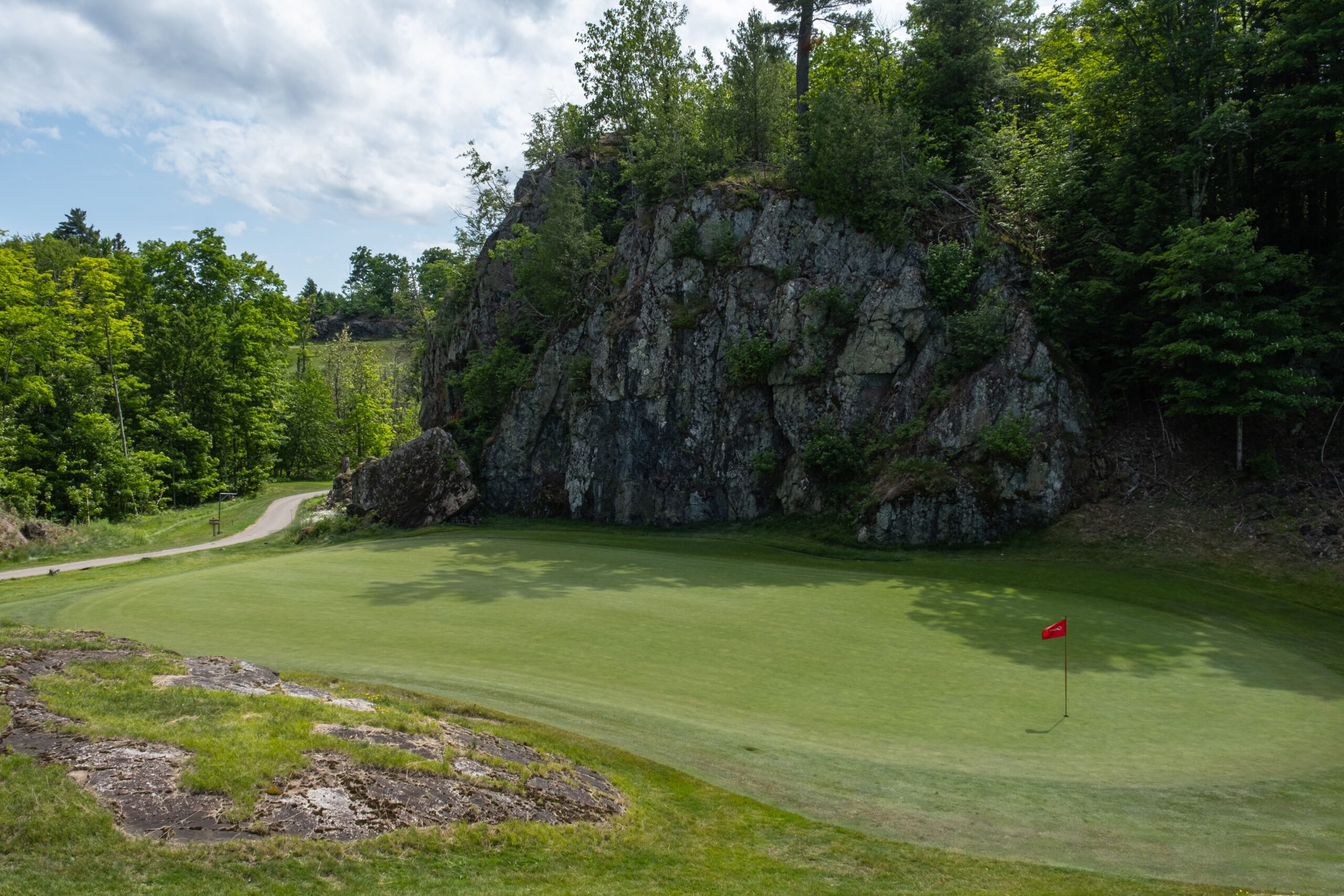
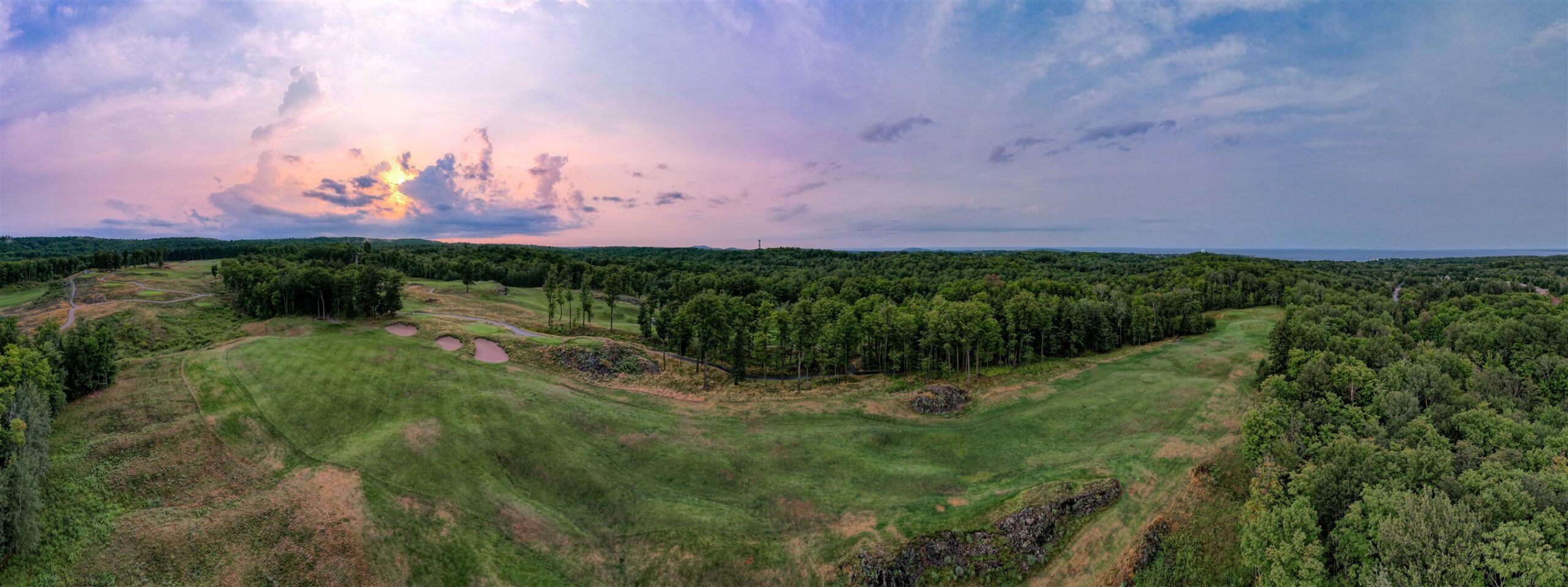
Greywalls at Marquette Golf Club
Centennial eraReinvention, Recognition & The Centennial Era2000–2026
Greywalls · Designed by Mike DeVries

Milestone 38 of 52 · Reinvention, Recognition & The Centennial Era

A Vision for the Future

To balance growing member demand with new revenue opportunities, the Board appointed an architect-search committee to study the property acquired in the previous decade. Chaired by John Bordeau, the committee ultimately recommended Michigan golf course architect Mike DeVries. The choice launched one of the most ambitious projects in Club history.

Milestone 39 of 52 · Reinvention, Recognition & The Centennial Era

A New Name for a New Era

With expansion underway, the organization began transitioning from Marquette Golf & Country Club to Marquette Golf Club. The shorter name honored the Club's traditions while anticipating its future as a two-course destination and community institution.

Milestone 40 of 52 · Reinvention, Recognition & The Centennial Era

A Ceremonial Preview of Greywalls

With Greywalls nearing completion, Club President Earl Hawn, Club Professional Marc Gilmore, and Superintendent Pete Chevrette led a ceremonial preview of the new course. Longtime Club leader Loretta Acocks was named a Lifetime Honorary Member during the occasion. Greywalls would fully open in 2005.

Milestone 41 of 52 · Reinvention, Recognition & The Centennial Era

The First Ceremonial Foursome

The first ceremonial foursome to play Greywalls brought together Don “Porkie” Koskey, Walt Cook, Bob Johnson, and Bill Connors. Their round connected generations of Club members with the project that would carry Marquette into a new era. Club Professional Marc Gilmore presided over the occasion.

Milestone 42 of 52 · Reinvention, Recognition & The Centennial Era

Greywalls Fully Opens

Greywalls fully opened in 2005. Mike DeVries's routing across exposed granite, mature forest, and dramatic elevation changes quickly drew attention from golfers and golf publications beyond the Upper Peninsula. The Club also formally adopted the Marquette Golf Club name, marking the beginning of its modern two-course era.

Milestone 43 of 52 · Reinvention, Recognition & The Centennial Era

Among Michigan's Best

Greywalls's early acclaim arrived quickly. GOLF included it among its Top Ten You Can Play; Golf Digest ranked it No. 3 among the nation's Best New Upscale Public Courses; Travel + Leisure Golf named it one of the Top 10 New Courses in the World; and Golfweek ranked it No. 2 among Michigan's public-access courses. Together, the honors announced Marquette Golf Club to a national audience.

Milestone 44 of 52 · Reinvention, Recognition & The Centennial Era

The Great Hailstorm

On June 20, a severe hailstorm struck Marquette, damaging greens, uprooting trees, and temporarily closing both Heritage and Greywalls. The grounds staff mounted an intensive repair effort and restored the courses to play. Club lore links the storm to Haylie Marietta, born two days later into a family with three generations of Club ties—a playful story that remains part of the Club's oral history.

Milestone 45 of 52 · Reinvention, Recognition & The Centennial Era

Financial Challenges

Greywalls's success did not eliminate the financial strain created by construction debt and rising operating costs. Under President Robert Barkowiak, members twice supported capital initiatives known as "The Plan" and "The Plan II." Their collective commitment helped the Club navigate one of the most demanding periods in its modern history while preserving the vision behind Greywalls.

Milestone 46 of 52 · Reinvention, Recognition & The Centennial Era

A National Top-100 Debut

Greywalls debuted at No. 92 on Golfweek's list of America's Top 100 Modern Courses. The same annual issue placed it No. 3 among Michigan's public-access courses, giving national recognition to a course that had opened only five years earlier.

Milestone 47 of 52 · Reinvention, Recognition & The Centennial Era

The Original Routing Rediscovered

A 1931 Club prospectus returned to attention, revealing Langford and Moreau's original eighteen-hole plan. The Club identified the nine surviving holes within Heritage as LM1 through LM9, making the Golden Age sequence legible to a new generation of golfers and reconnecting the modern course with its founders' larger vision.

Milestone 48 of 52 · Reinvention, Recognition & The Centennial Era

A Two-Course Destination

By the middle of the decade, Marquette Golf Club had become a destination for golfers seeking two distinct architectural experiences: Greywalls, Mike DeVries's modern course through exposed granite and forest, and Heritage, with nine surviving holes by William Langford and Theodore Moreau. National attention grew without displacing the Club's community traditions.

Milestone 49 of 52 · Reinvention, Recognition & The Centennial Era

Golf's Great Renaissance

During the pandemic-era surge in golf, Marquette Golf Club welcomed record participation, strong membership growth, and renewed enthusiasm for the game. The Club's improving financial position allowed leaders to accelerate retirement of Greywalls construction debt while continuing to invest in the property. Presidents Robert Raica and Michele Butler led the Club through this period.

Milestone 50 of 52 · Reinvention, Recognition & The Centennial Era

A New Head Professional

Marquette Golf Club appointed Robert “Bob” Bastian its seventh head golf professional during Robert Raica's second presidency. An Upper Peninsula native and graduate of Ferris State University's PGA Golf Management Program, Bastian had joined MGC as an assistant professional in 2015. His appointment continued a lineage stretching back to Percy Cook and the Club's earliest years.

Milestone 51 of 52 · Reinvention, Recognition & The Centennial Era

Honoring the Founders' Architects

The Langford & Moreau Society, established in 2024, welcomed Marquette Golf Club's Heritage Course as a member course. The membership joined Marquette with other clubs committed to preserving and celebrating the work of William Langford and Theodore Moreau, strengthening the Club's connection to its architectural heritage.

Milestone 52 of 52 · Reinvention, Recognition & The Centennial Era

Celebrating One Hundred Years

One hundred years after citizens organized the Marquette Golf & Country Club, members marked a century of golf, friendship, and community. Under President Lisa Leskanic, the centennial season honors the members, professionals, superintendents, employees, volunteers, and leaders whose stewardship carried the Club from founding vision to two-course destination. As its second century begins, Marquette Golf Club remains guided by the perseverance and care that shaped its first.

The Marquette Golf Club 100 Year Society

OUR FOUNDING

Golden Age architecture · 1926

The Langford Loop

William B. Langford and Theodore J. Moreau prepared an eighteen-hole plan dated 1926. The Club formally engaged them in 1927, but financial realities limited initial construction to nine holes. In modified form, those holes remain within today's Heritage Course as Nos. 4–8 and 10–13.

Renumbering followed when David Gill supplied a different second nine in the 1960s. The original work remains legible in the bold green contours, strategic angles and rolling ground that connect the modern course to its founders.

A sculpted green complex on Marquette Golf Club's Heritage Course
Heritage Course · The surviving Langford & Moreau nine

Present-day playing order

Nine holes, one surviving idea

Pars and single-value yardages follow the Club's current Heritage course tour.

Current Langford Loop holes, pars, course-tour yardages and playing character
HoleParYardsCharacter
45515A slight dogleg right with an undulating green.
53169An uphill one-shotter to a closely bunkered green.
64287A short, potentially drivable par four.
73143An elevated tee and a severe back-to-front green.
84401A blind tee shot into the original rolling ground.
104355A compact hole defined by a heavily sloped green.
114 / 5450A long uphill hole finishing at a ridged green.
124449A demanding approach to a large, undulating green complex.
134327A short, picturesque par four that completes the loop.

Yardages reflect the Club's published course tour, not verified 1926 measurements. No. 11 plays as a par four for men and par five for women. Today's No. 6 was originally a par three.

People, partnership and preservation

Open the architects' file

01William B. Langford

A Yale golfer and Columbia-trained mining engineer, Langford brought an engineer's command of drainage and earthwork to bold, strategic golf. He later became one of the fourteen founders of the American Society of Golf Course Architects in 1947.

Langford & Moreau Society biography
02The Langford & Moreau partnership

Theodore J. Moreau studied landscape and athletics before joining American Park Builders. He and Langford formalized their independent partnership in 1921, pairing Langford's design leadership with Moreau's landscape and construction expertise across a documented portfolio of dozens of courses.

Read the partnership history
03The routing returns to view

The Club's centennial archive dates the original routing prospectus's rediscovery to 2011. A contemporaneous grounds record documents the installation of LM1 through LM9 markers that same year, making the Golden Age sequence legible to a new generation of golfers.

2011 club grounds record

CLUB PROFESSIONALS

Service, instruction and stewardship

A Century of Club Professionals

Marquette's professionals have done far more than manage a golf shop. Across generations they taught the game, cared for the course, built junior programs and helped carry the Club through fire, war, expansion and national recognition.

Professional by 1928 · documented in 1932

Percy Cook

Cook helped inaugurate the course when it opened in 1928. By 1932, Golfdom identified him as Marquette's professional and course superintendent and as an organizer of an Upper Peninsula greenkeeping short course.

Golfdom archive, June 1932

The World War II years

Pat Gustafson

Club records identify Gustafson as the professional who helped steward Marquette through wartime declines in membership, participation and revenue, while the Club extended course privileges to members of the armed forces.

Club centennial archive

At Marquette by 1945

Russ Leonard

After an attempted appointment of Frank Lynn ended amid internal disagreement, Leonard became the Club's third professional. Golfdom introduced him as Marquette's new professional in June 1945.

Golfdom archive, June 1945

Hired in 1948

Harry Flora

The Club hired Flora as its fourth professional. A 1951 Golfdom report noted that he served Marquette during the summer while returning for a second winter season in Bisbee, Arizona.

Golfdom archive, January 1951

Hired in 1958

Harry Cebalo

The Club's fifth professional guided Marquette through construction of the second nine and expansion of youth golf. After lightning destroyed his golf shop in 1960, operations continued from the clubhouse basement.

Golfdom archive, October 1960

At MGC since 1983

Marc Gilmore

Hired as Marquette's sixth professional, Gilmore served for four decades as its Class A PGA Head Golf Professional. He is now Director of Golf Operations and remains central to the Club's two-course era.

Official club management profile

Head Professional since 2023

Robert “Bob” Bastian

An Upper Peninsula native and Ferris State PGA Golf Management graduate, Bastian joined MGC as an assistant in 2015. In 2023 he became the Club's seventh professional and now serves as Class A PGA Head Golf Professional.

Official club management profile

OUR CENTENNIAL

Two eras · one club

Celebrating One Hundred Years

Heritage preserves the Golden Age work of Langford and Moreau. Nearly eight decades later, Mike DeVries responded to a different landscape of granite, wetlands, forest and sand to create Greywalls, which fully opened in 2005.

DeVries's team moved roughly 40,000 cubic yards of soil and blasted only 3,000 cubic yards of rock. The restraint explains the course's character: the land supplies the drama while the routing supplies the rhythm.

The Heritage Course at Marquette Golf Club
HeritageLangford & Moreau · 1926
Greywalls routed through exposed granite at Marquette Golf Club
GreywallsMike DeVries · 2005

LAKE SUPERIOR LEGACY

The Story Continues

As the second century begins, the story of Marquette Golf Club continues—guided by the same vision, perseverance and stewardship that inspired its founders a century earlier.